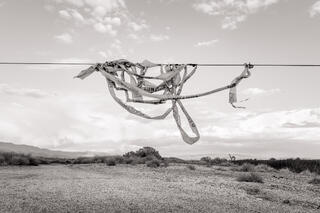
Owens Lake is a 100-square-mile dry lake bed in California's Owens Valley. At the turn of the 20-the century the lake was more than 70,000 acres in size and more than 30-feet-deep. In 1913, water demands in the growing metropolis of Los Angeles resulted in the Owens River being diverted south, denying the lake its main water source. By 1926 the lake was completely dry. A consequence of this unnatural desiccation was that the valley's frequent high winds caused serious environmental and health issues with severe dust storms. As of 2013, it was the largest source of dust pollution in the United States, including harmful levels of alkaline dust and other chemicals.
Due to lawsuits and court orders, remediation efforts have focused on reducing dust pollution and restoring, at least in part, waterfowl habitat.
The lake bed is now a surreal landscape, almost alien, with a network of dirt roads, levees, fences, pump housings, and pipelines surrounded by fields of salt grass, cracked mud, shallow ponds, and other sections of various remediation efforts.